

.jpg)




.jpg)




.jpg)


-webp.webp)
-webp.webp)


-webp.webp)


-Özetini-Yayınladı-webp.webp)


-webp.webp)

-webp.webp)

-webp.webp)
-webp.webp)


-webp.webp)
-webp.webp)
-webp.webp)
-webp.webp)
-webp.webp)
-webp.webp)
-webp.webp)
-webp.webp)
-webp.webp)
-webp.webp)
-webp.webp)

-webp.webp)


-webp.webp)


-webp.webp)
-webp.webp)

-webp.webp)


-webp.webp)
-webp.webp)


-webp.webp)
-webp.webp)


-webp.webp)


-webp.webp)
-webp.webp)


-webp.webp)
-webp.webp)


-webp.webp)


-webp.webp)

-webp.webp)


-webp.webp)
-webp.webp)

-webp.webp)


-webp.webp)


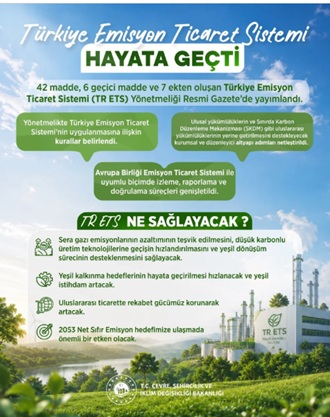
The carbon tax payment period for some products imported by the European Union (EU) within the scope of the Border Carbon Regulation Mechanism (SKDM) will begin in a few months. Exporters, who have been responsible only for reporting the carbon content of their products since 2023, will also be financially responsible from the beginning of 2026. So, what does this new era mean for Türkiye? SHURA Energy Conversion Center evaluated the economic effects of the mechanism on Turkey.
SKDM is a "carbon leakage" prevention mechanism agreed upon within the scope of the EU's Green Deal package. The purpose of the application is to apply the carbon tax collected from products produced in the EU to products coming from outside the union under the same conditions, thus preventing tax avoidance ("carbon leakage") by shifting carbon-emitting productions outside the union. In this way, it is aimed to protect the production made in the EU against imported products that are not subject to carbon tax, and to encourage decarbonization on the other hand.
SKDM covers the production of iron and steel, aluminum, cement, fertilizer, hydrogen and electricity in the first phase. It is planned to gradually reduce and eliminate the carbon tax exemptions granted to producers within the EU by 2034 for these products, and to tax imported products in the same way. In this context, while the payment obligation remained relatively low in the first few years of the application, it is expected to increase rapidly starting from 2029.
After 2030, the EU plans to expand SKDM to cover all metals, refinery products, fuels used for transportation, organic chemicals, glass, ceramics, lime and gypsum, paper and cellulose products, air and maritime transport. In addition, other countries, especially the UK, are expected to launch their own SKDM applications.
The New Era Brings Significant Opportunities and Risks
According to SHURA's report titled "SKDM and Turkey: Sectoral Interactions, Benefits and Costs", while the EU's current SKDM application has a negligible impact compared to Turkey's GDP, it appears to have reached significant amounts when compared to the added value obtained from the export of relevant products. For exports to the EU, at the current EU ETS price of 70€/ton, the emission cost reaches up to two-thirds of the added value from exports, while if the carbon price reaches 100€/ton, the carbon cost and the added value from exports become at par. This is due to the fact that the added value ratio of exported products is very low compared to their carbon intensity.
In an industrial transformation scenario suggested by SHURA, whose main axis is the production composition that will facilitate the green transformation and increase unit added value, it is revealed that the benefits can be increased while the costs are significantly reduced. In the transformation scenario, it is envisaged that the share of high-export, low-value-added products within the scope of SKDM in production and exports will decrease, the share of relatively high-value-added products will increase, and thus, additional benefits will be obtained in the machinery-equipment, electrical equipment, automotive, energy equipment, construction-infrastructure sectors that use these products as basic inputs domestically. In other words, in the Transformation scenario, despite the decrease in exports, net benefits can be achieved thanks to the increase in added value in the user (forward-connected) sectors and reduced carbon and transportation costs. Therefore, the Transformation scenario greatly alleviates the negative impacts that will arise from emission costs within the scope of SKDM.
What needs to be done to alleviate the effects of SKDM and increase the economic benefit are listed as follows:
Things to Consider
Strategies for Sectors
National Strategies
Source: EKOIQ


Information Notice and Personal Data Protection Policy under the Personal Data Protection Law: The personal data listed by way of example in Article 2 of the Personal Data Protection Policy may be shared with the ÇEVKO Foundation and used on its website, applications, and social media channels, to be used in notifications and recommendations, and to be shared with third parties for commercial purposes provided that it is in the interest of the members, and I hereby accept and declare my explicit consent, defined under the KVKK as “consent based on information and freely given for a specific purpose.”
You can manage cookie categories separately
For more information, you can check the Privacy Policy and Protection of Personal Data pages