

.jpg)




.jpg)


.jpg)


-webp.webp)
-webp.webp)


-webp.webp)


-Özetini-Yayınladı-webp.webp)


-webp.webp)

-webp.webp)

-webp.webp)
-webp.webp)


-webp.webp)
-webp.webp)
-webp.webp)
-webp.webp)
-webp.webp)
-webp.webp)
-webp.webp)
-webp.webp)
-webp.webp)
-webp.webp)
-webp.webp)

-webp.webp)


-webp.webp)


-webp.webp)
-webp.webp)

-webp.webp)


-webp.webp)
-webp.webp)


-webp.webp)
-webp.webp)


-webp.webp)


-webp.webp)
-webp.webp)


-webp.webp)
-webp.webp)


-webp.webp)


-webp.webp)

-webp.webp)


-webp.webp)
-webp.webp)

-webp.webp)


-webp.webp)


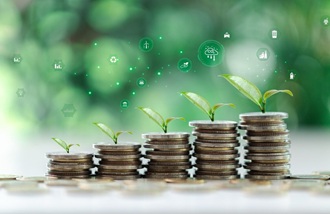
It has been calculated that an annual investment of $2 trillion is needed to achieve the commitment to triple global renewable energy capacity by 2030.
The commitment to triple global renewable energy capacity by 2030 was agreed by over 100 countries at the 28th Conference of the Parties to the United Nations Framework Convention on Climate Change (COP28) held in Dubai between 30 November and 12 December 2023.
In the new report of the international think tank Climate Analytics, the investments needed to achieve this goal were calculated.
Accordingly, a total investment of 12 trillion dollars is needed to triple the global renewable energy capacity by 2030. 4 trillion dollars of this investment is required for network and storage infrastructure.
While the total investment need is calculated as 2 trillion dollars annually until 2030, this figure means that the current investment level should be doubled.
However, the pace of steps needed to triple the global renewable energy capacity varies by region. In this context, the renewable energy capacity in Sub-Saharan Africa needs to increase 7 times in order to be compatible with the world scale.
It is estimated that Organization for Economic Co-operation and Development (OECD) countries will double their renewable energy capacity by 2030, but in this case, OECD countries fall behind the commitment made at COP28.
In the Asian region, renewable energy capacity needs to be increased approximately fourfold by 2030. Asia is predicted to be the only region to substantially achieve the goal of tripling renewable energy capacity, mostly driven by policies in China and India. However, significant coal and natural gas pipelines in these countries create the risk of stranded assets or slowing down the transformation.
According to the report, in order to limit the global temperature increase to 1.5 degrees, renewable energy capacity in the world needs to continue to grow strongly and increase 5 times its 2022 level by 2035.
In his evaluation of the report, Neil Grant, the lead author of the report and Climate Analytics Expert, said, "2 trillion dollars a year sounds like a cost, but it is actually a choice. Over 6 trillion dollars will be invested in fossil fuels in these 10 years, which is more than enough to close the investment gap required to achieve the goal of tripling renewable energy capacity. When faced with this choice, I would choose renewable energy, which is the safest and most valuable option." He said.
Climate Analytics Head of Policy Claire Fyson underlined that the OECD needs to triple its renewable energy capacity and said, "However, the countries in the region that claim to be climate leaders, which are currently far from the target, need to take action not only by increasing renewable energy in their own countries, but also for other regions that need financing to contribute to the tripling target." He warned.
Global Renewables Alliance Chief Executive Bruce Douglas stated that the renewable energy sector is ready to achieve this goal, but in order to achieve this goal on time, governments must take urgent action to further accelerate renewable energy investments.
Douglas pointed out the importance of public financing, saying, "International support, especially to provide access to low-cost capital for emerging markets to participate in the renewable energy era, is key to ensuring a clean, safe and just transition for all." He made his assessment.
Source: AA


Information Notice and Personal Data Protection Policy under the Personal Data Protection Law: The personal data listed by way of example in Article 2 of the Personal Data Protection Policy may be shared with the ÇEVKO Foundation and used on its website, applications, and social media channels, to be used in notifications and recommendations, and to be shared with third parties for commercial purposes provided that it is in the interest of the members, and I hereby accept and declare my explicit consent, defined under the KVKK as “consent based on information and freely given for a specific purpose.”
You can manage cookie categories separately
For more information, you can check the Privacy Policy and Protection of Personal Data pages