

.jpg)







.jpg)



.jpg)


-webp.webp)
-webp.webp)


-webp.webp)


-Özetini-Yayınladı-webp.webp)


-webp.webp)

-webp.webp)

-webp.webp)
-webp.webp)


-webp.webp)
-webp.webp)
-webp.webp)
-webp.webp)
-webp.webp)
-webp.webp)
-webp.webp)
-webp.webp)
-webp.webp)
-webp.webp)
-webp.webp)

-webp.webp)


-webp.webp)


-webp.webp)
-webp.webp)

-webp.webp)


-webp.webp)
-webp.webp)


-webp.webp)
-webp.webp)


-webp.webp)


-webp.webp)
-webp.webp)


-webp.webp)
-webp.webp)


-webp.webp)


-webp.webp)

-webp.webp)


-webp.webp)
-webp.webp)

-webp.webp)


-webp.webp)


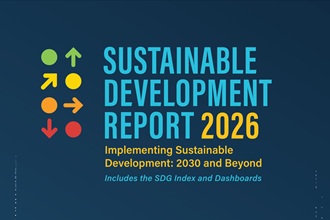
In order to analyze the impact of the global private sector on the 17 UN Sustainable Development Goals (SDGs), a report titled "SDG ASSESSMENT FROM THE PERSPECTIVE OF THE PRIVATE SECTOR" was published in early October 2023 by the United Nations Global Compact and Accenture.
In the foreword of the report, the United Nations Global Compact Deputy Secretary-General, Executive Director and CEO Sanda Ojiambo says, "Halfway down the road, the world is not progressing as planned to reach the Sustainable Development Goals (SDGs) agreed upon in 2015 by 2030. We are at a critical moment and the world needs to change its course to get sustainable development back on track." Ojiambo adds that the United Nations Global Compact - Accenture ‘Global Private Sector Situation Assessment’ report reveals that although the private sector continues to adopt the SDGs as a vision for the future, it has lost confidence in our ability to achieve the SDGs in the remaining time. Despite the strong and positive contribution of the private sector to economic growth and job creation, she states that this contribution comes at the expense of climate, nature, water and waste, and that the net negative impacts on global health, poverty and hunger are intensifying. She points out that the report emphasizes the importance of the private sector focusing its actions where it can have a major impact, and that 10 pathways are recommended to businesses for the 17 SDGs. Ojiambo believes that future-oriented change will only be possible through a clear plan and closer cooperation among all stakeholders from private, public and non-profit organizations. She states that business leaders are calling on stakeholders from the public sector and supply chains to be more ambitious and to drive change through policy and partnerships, warning that there is little time left until 2030 and the risks are high. Ojiambo adds that it is time for the private sector to take bold and ambitious steps for faster progress.
Accenture Sustainability Services Leader Stephanie Jamison and Inclusive Business Global Leader Anastasia Marceau state that the private sector is a critical stakeholder in achieving the SDGs and that we are halfway to realizing these goals; they argue that businesses contribute to all 17 SDGs and that their actions will be the key to reaching or missing the targets by 2030. Jamison and Marceau say, "Today, with advances in technology and data analytics, we can explore new ways to consistently measure the SDG impact of thousands of companies and link it with ESG reporting." They suggest that the report is a good example of how these new tools can be used to better understand the strong contributions and negative impacts of companies; and conclude that it is also a good tool to express the plans developed to accelerate the ambitious action expected from the private sector. Jamison and Marceau also indicate that ESG Book, Impaakt and Util provided data for the report.
The first part of the report provides a detailed look at the private sector's contribution to the 17 SDGs. By combining the new measurements of SDG impact analysis with ESG reporting, economic impact assessments and a survey of more than 2,800 business leaders, the report provides a comprehensive view of how the private sector has contributed to the SDGs so far.
The second half of the report outlines an action plan towards 2030. Based on the United Nations Global Compact 'Forward Faster' priorities, the report provides business leaders with a practical framework to create major impact. The report concludes by listing recommendations on a series of public policies that could accelerate SDG action.
SDG BUSINESS REPORT: OVERVIEW OF THE PRIVATE SECTOR'S CONTRIBUTIONS TO THE SDGs (2015-2022)
Based on innovative data sources, the report measures the impact of the global private sector on the SDGs for the first time. When SDG impact data is analyzed, it reveals that the private sector’s greatest contribution to the SDGs is by creating employment opportunities and advancing economic growth. However, it is argued that this growth has an environmentally negative cost and that negative environmental factors further increase social deterioration related to poverty, hunger, healthcare, and global peace. The 2023 Sustainable Development Report reveals that at the midpoint between 2015 and 2030, 85% of SDG indicators are behind schedule and that if things continue this way, none of the SDGs will be reached in 2030.
The report states that business leaders' interest in the SDGs has declined in recent years; confidence in the possibility of achieving the SDGs has decreased. While almost all business leaders (94%) believe in the SDG vision, only half (49%) believe that the world will reach the SDGs by 2030.
Most business leaders (81%) believe that their own companies are making enough effort to contribute to the SDGs, while 62% state that their sectors are successful in this regard, and only half (48%) believe that the private sector overall has shown sufficient success. In addition, almost half (44%) of business leaders say that governments are the key stakeholder they want to see more involved when it comes to SDG action.
The report states that leading industrial organizations have already started taking action: 95% of these organizations understand how their business impacts the SDGs. 91% have public commitments to one or more SDGs. 79% report that they have identified a business case for achieving at least one SDG. 78% have made changes in their products or services to align with at least one SDG.
According to the report, despite the increasing focus on the SDGs, they are still not a priority for many business leaders. It is presented as evidence that in online meetings where financial results are discussed, there are very few references to the SDGs compared to emerging new technologies.
According to the report, despite the rise of sustainability in the world, business leaders struggle to measure and understand the impact of their companies on the SDGs. The private sector’s focus on sustainable development is largely limited to ESG regulations (Environment, Social, Governance based regulations). Business leaders need tools and education to understand how their businesses impact the SDGs.
The report claims that since there is no clear business metric tied to the SDGs nor standardized reporting on SDG impact, there is an increase in a type of ‘greenwashing’ referred to as ‘SDG washing’. According to the report, miscalculation of impact may stem not only from misunderstanding how business actions relate to the SDGs, but also from the inability to properly track and measure impact data. It could even be a product of the current system. As known, incentives in the private sector are often geared towards short-term profitability rather than encouraging long-term impact. According to the report, the tendency to value short-term profits more than long-term impact creates a structural and psychological barrier to meaningful contributions to the SDGs. This may lead companies to exaggerate the importance of relatively small positive impacts while ignoring the measurement and investment needed to address larger negative impacts.
According to the report, business leaders need to complement ESG measurements, which focus on reducing sustainability risks for businesses, with SDG impact measurements, which focus on optimizing positive contributions. Bridging the gap between ESG and SDGs will enable faster adoption of SDGs, better measurement and reporting of their impacts. As a result, businesses will have clear, measurable targets that can be integrated into accounting and taxation systems. For this reason, many organizations are now working not only on ESG measurement but also on connecting with the SDGs. According to the report, this has led to the emergence of many new industries and innovative players in sustainability measurement.
MAPPING THE ROAD TO 2030: THE SDG ACTION PLAN FOR THE PRIVATE SECTOR (2023-2030)
The report argues that achieving the SDGs by 2030 will require the world to shift from an outdated linear economy to a fairer and more sustainable economic system. The report states that to effectively carry out this transition and achieve the SDGs by 2030, the private sector needs to adopt three fundamental principles. According to the report, business leaders can take calculated risks to advance the 2030 agenda by focusing each business on where it can maximize its positive impact while minimizing its negative impact.
The three fundamental principles are as follows:
I) EXPAND THE BENEFITS OF MARKETS to Realize Social Responsibility
“Benefit from the effects of economic activity and innovation and promote a fair and inclusive society!”
II) TRANSFORM BUSINESS Fundamentally to Achieve Environmental Sustainability
“Align business models to reduce environmental impacts and match traditional economic growth metrics with environmental sustainability!”
III) ESTABLISH NEW INCENTIVE SYSTEMS to Redefine Success in terms of Risk, Return and Impact
“Adapt governance and corporate finance strategies to your company to encourage alignment of the private sector with the SDGs!”
The 2030 Plan presents 10 pathways for each business to shape its own contribution. These 10 pathways represent cross-sectoral actions that can enable the private sector to incorporate the SDGs into its core operations. Since all SDGs are interconnected, these 10 pathways serve to support most of them. Some pathways represent actions already started but need to be accelerated, while others include new and ambitious actions. According to the report, the importance of pathways may vary depending on the sector, industry and where a company is in its sustainability journey.
The report states that to achieve faster progress towards the SDGs, the private sector will need to expand the benefits of markets to more people, transform economies to be more sustainable, and create new incentive models focusing on long-term balancing of risk, return and SDG impact.
In the report, the following “10 commandments” under the previously mentioned three main principles are proposed for achieving the goals in 2030:
I) EXPAND THE BENEFITS OF MARKETS to Realize Social Responsibility
1. “Reiterate your fundamental commitments, including respect for human rights and principled business ethics.”
2. “Pay workers a wage that enables them to make a living.”
3. “Promote gender equality.”
4. “Act responsibly in innovations.”
II) TRANSFORM BUSINESS Fundamentally to Achieve Environmental Sustainability
5. “Accelerate climate action.”
6. “Increase water resilience.”
7. “Protect and restore nature.”
8. “Invest in circularity.”
III) ESTABLISH NEW INCENTIVE SYSTEMS to Redefine Success in terms of Risk, Return and Impact
9. “Transition to sustainable corporate finance.”
10. “Strengthen sustainability leadership.”
The report states that changes in government policies are critical to increasing business contributions to the SDGs, and that achieving significant progress within the remaining seven years will only be possible through closer cooperation with a clear plan among public, private and non-profit players. The report also emphasizes that to fully capitalize on the private sector’s potential, the right policies must be implemented to encourage action across all 10 recommendations.
In the report, it is stated that businesses need the involvement of governments. 44% of businesses participating in the survey list policymakers as the most important stakeholder group whose greater involvement is needed. Governments represent the group that business leaders say they need more support from to increase their impact on the SDGs. To lead the necessary change before 2030, businesses want to feel that governments engage with them, support them and enter into partnerships with them.
Businesses also have demands regarding incentives. 80% state that insufficient policy incentives hinder progress in integrating the SDGs into business strategy; they demand that governments introduce policy incentives that will help integrate the SDGs into business strategies and operations. This will create a level playing field for all businesses, scale actions, and also provide guidance on where to focus efforts.
Businesses need clear guidance. 84% of survey participants state that the uncertainty regarding the measurement and calculation of SDG impacts is a significant barrier. According to the report, businesses struggle to understand how to calculate their impacts on the SDGs. Clear measurement criteria and calculation methods are needed not only to report progress accurately, but also to make informed decisions on this matter.
BUSINESSES ARE CALLING ON POLICYMAKERS TO TRIGGER SDG ACTION IN THE FOLLOWING AREAS:
Business leaders state that they will support policies that will help realize the above recommendations, and they demand the following:
ESTABLISHMENT OF NEW INCENTIVE SYSTEMS TO REDEFINE SUCCESS IN TERMS OF RISK, RETURN AND IMPACT:
According to the report, the biggest demand from business leaders (76%) is consistent sustainability reporting and disclosure requirements. These will help ensure that all businesses are held to the same standard both nationally and globally.
EXPANDING THE BENEFITS OF MARKETS TO ENSURE SOCIAL RESPONSIBILITY:
The second demand (71%) is to bring the national minimum wage to equal living wage levels – it is stated that this demand, which appears as a cost from the employer's perspective, can only be acceptable if everyone shares the burden fairly. In addition, the majority of business survey participants support policies that will promote gender equality, that is, the mandatory disclosure of gender-based wage gaps (65%) and mandatory paid shared parental leave to be covered by the company (58%).
TRANSFORMING BUSINESS FUNDAMENTALLY TO ENSURE ENVIRONMENTAL SUSTAINABILITY:
Finally, according to the report, businesses support a series of stronger policies to strengthen environmental protection. By advocating policies such as shifting subsidies from fossil fuels to renewable energies (68%), achieving net-zero emissions for all businesses by 2050 (62%), and carbon pricing to reduce fossil fuel use and transition to renewable energy (60%), businesses are asking policymakers to support the ‘transition to clean energy.’ Businesses also advocate mandatory disclosures, including mandatory reporting of water abstraction and consumption (64%) and mandatory reporting of nature-related risks and impact (61%). According to the report, advocating for more transparency will enable better decision making for both individual companies and for the entire private sector.
Mete İmer


Information Notice and Personal Data Protection Policy under the Personal Data Protection Law: The personal data listed by way of example in Article 2 of the Personal Data Protection Policy may be shared with the ÇEVKO Foundation and used on its website, applications, and social media channels, to be used in notifications and recommendations, and to be shared with third parties for commercial purposes provided that it is in the interest of the members, and I hereby accept and declare my explicit consent, defined under the KVKK as “consent based on information and freely given for a specific purpose.”
You can manage cookie categories separately
For more information, you can check the Privacy Policy and Protection of Personal Data pages