

.jpg)



.jpg)



.jpg)


-webp.webp)
-webp.webp)


-webp.webp)


-Özetini-Yayınladı-webp.webp)


-webp.webp)

-webp.webp)

-webp.webp)
-webp.webp)


-webp.webp)
-webp.webp)
-webp.webp)
-webp.webp)
-webp.webp)
-webp.webp)
-webp.webp)
-webp.webp)
-webp.webp)
-webp.webp)
-webp.webp)

-webp.webp)


-webp.webp)


-webp.webp)
-webp.webp)

-webp.webp)


-webp.webp)
-webp.webp)


-webp.webp)
-webp.webp)


-webp.webp)


-webp.webp)
-webp.webp)


-webp.webp)
-webp.webp)


-webp.webp)


-webp.webp)

-webp.webp)


-webp.webp)
-webp.webp)

-webp.webp)


-webp.webp)


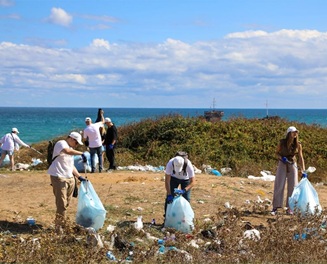
The "Building Economic Resilience Against the Effects of Climate Change on Health" report, prepared in cooperation with the World Economic Forum (WEF) and Boston Consulting Group (BCG), shows that the effects of climate change on health are deeply affecting the global economy. He warns that it will shake us.
According to the report, if the necessary measures are not taken, more than 14.5 million deaths and a loss of 12.5 trillion dollars in the global economy are predicted by 2050. Most of these losses are expected to be seen in regions with weak infrastructure, limited access to health services and unprepared for disasters.
There may be a production loss of $1.5 trillion in the next 25 years
Health problems caused by climate change are no longer just a humanitarian crisis; It is also seen as a massive threat that fundamentally shakes the global economy. According to the report, climate-related health risks such as rising temperatures, new epidemics, food insecurity and air pollution will significantly reduce economic productivity over the next 25 years. Employees being away from the workforce due to illness or experiencing loss of productivity will cause a total production loss of more than 1.5 trillion dollars in the 2025-2050 period.
These losses will directly affect not only company balance sheets but also the economic growth of countries. Especially in labor-intensive sectors such as agriculture, construction and healthcare, workforce losses will disrupt supply chains, increase costs and reduce competitiveness.
On the other hand, health systems will also have difficulty bearing the burden of climate change. According to the report, increasing health risks in a wide range from extreme heat-related deaths to infectious diseases, from malnutrition and chronic diseases to mental health problems will impose an additional treatment cost of 1.1 trillion dollars on global health systems. The public and private sectors will have to invest more to cope with these costs. However, the report states that future losses can be reduced and new opportunities can be created with measures taken today.
Which sectors are the most fragile?
The report examines in detail the four sectors most exposed to climate-health impacts and therefore most vulnerable. These sectors include food and agriculture, built environment, healthcare and insurance.
What steps should companies take?
The report lists basic recommendations not only for four critical sectors, but also for the entire business world:
The report warns that if action is not taken today, we will face great costs in the future. According to the report, if companies do not integrate climate-health risks into their business strategies, increasing costs, production losses, workforce problems and social instability will be inevitable.
Therefore, the report makes three basic calls to the business world: establishing global cooperation, developing innovative financing models and integrating climate-health resilience into business strategies.
Source: ISO Green Blog


Information Notice and Personal Data Protection Policy under the Personal Data Protection Law: The personal data listed by way of example in Article 2 of the Personal Data Protection Policy may be shared with the ÇEVKO Foundation and used on its website, applications, and social media channels, to be used in notifications and recommendations, and to be shared with third parties for commercial purposes provided that it is in the interest of the members, and I hereby accept and declare my explicit consent, defined under the KVKK as “consent based on information and freely given for a specific purpose.”
You can manage cookie categories separately
For more information, you can check the Privacy Policy and Protection of Personal Data pages